
Pond & Lake Aeration
── Texas Premier Lake Management
Pond & Lake Aeration in Texas | Fountains & Aeration
A Texas pond lives and dies by its oxygen. When the summer heat settles in and the water warms, the dissolved oxygen your fish depend on can crash overnight — and the first sign is often fish gulping at the surface or a fish kill you wake up to. Pond aeration is the single best insurance against that, and the foundation of a healthy, balanced waterbody year-round. Texas Premier Lake Management designs, installs, and services aeration systems and fountains across Texas, sized to the actual water in front of us.
Cameron Fourrier is hands-on for every install, and he is an equipment dealer for Airmax and Keeton Industries — top-of-the-line brands he deals for directly — while installing and servicing all major brands. The recommendation you get is built around your pond's needs, not around clearing out one product line. Owner-led service, licensed and fully insured, with the right equipment behind it.
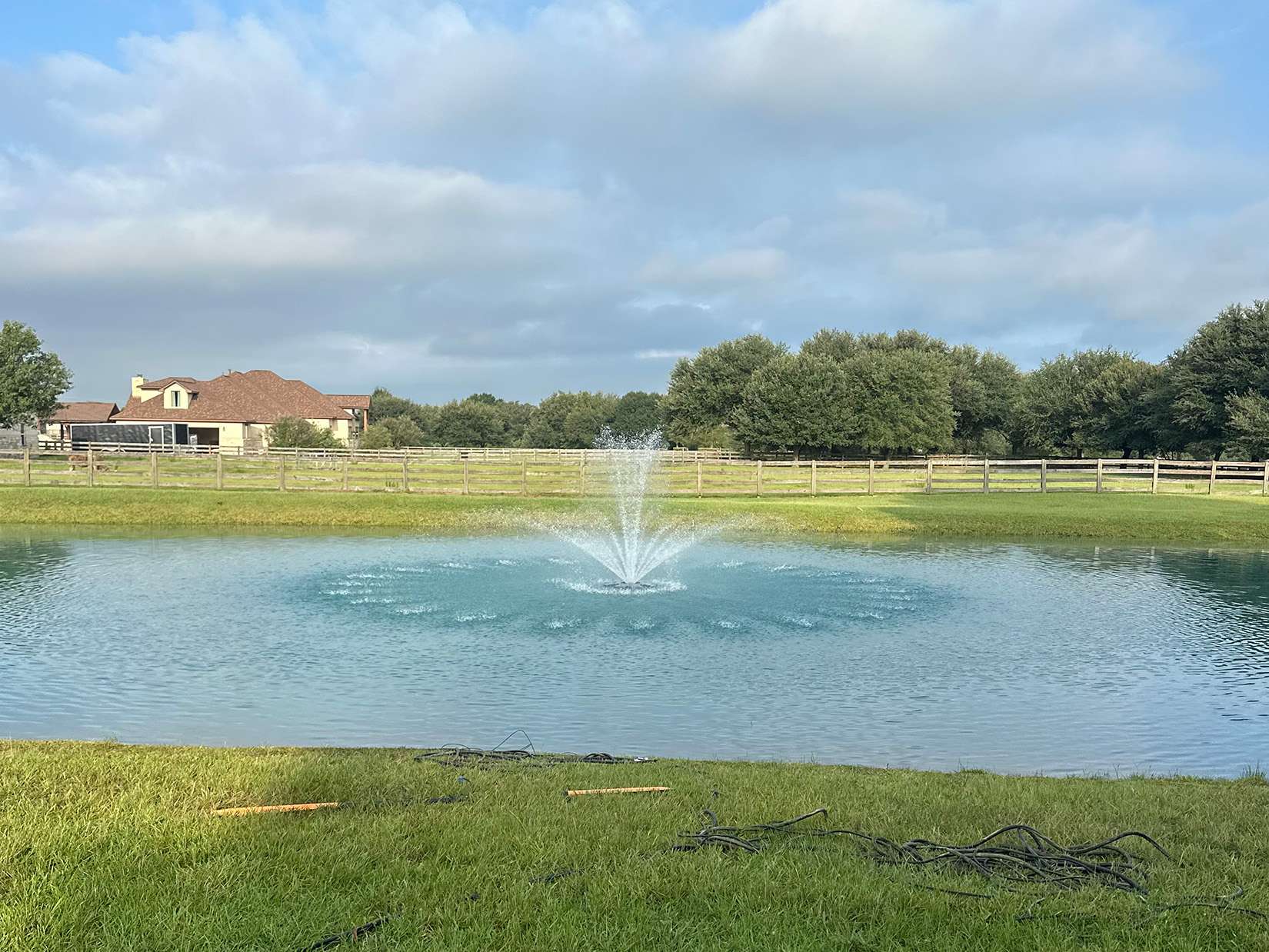
What Our Fountains & Aeration Service Includes
Aeration is not one product. It is a family of systems, and the right one depends on how deep and how big your water is, what you're trying to accomplish, and whether you want the equipment seen or unseen. We work with three main types.
Diffused (Bottom) Aeration
Diffused aeration — also called bottom aeration — puts a diffuser on the pond floor and pushes air through it from a shore-mounted compressor. As the fine bubbles rise, they pull water up with them and transfer oxygen along the way. Because the bubbles are released deep, they stay in contact with the water longer and give up more of their oxygen before reaching the surface. The result is a system that aerates and circulates the entire water column from the bottom up, not just the top few feet.
Read More
That bottom-up circulation makes diffused aeration the right call for deeper ponds. It mixes the layers, keeps oxygen reaching the depths, and breaks down the stratification that sets up summer fish kills. For most ponds deeper than about six feet, it's the system we recommend.
Read Less
Surface Aerators
Surface aerators work from the top down. They throw water into the air or churn the surface, increasing the air-water contact area and the turbulence that drives oxygen into the water. They move a lot of water fast, which makes them effective in shallower ponds and excellent for emergency oxygenation when a pond is in distress. They shine where the water isn't deep enough to justify a full diffused system, or where you want strong, visible surface movement — and we'll tell you honestly which approach fits your pond.
Fountains
A decorative fountain is a surface aerator with a show. It delivers the same surface oxygen transfer while throwing an attractive spray pattern — the kind of centerpiece that turns an HOA retention pond or a corporate campus lake into an amenity, often with lighting options for evening appeal. Fountains suit the buyers who care how the water looks as much as how it performs. We'll be straight with you, though: a fountain primarily aerates the upper layer, so on a deep pond with a stratification problem, we may pair it with — or steer you toward — a diffused system that reaches the bottom.
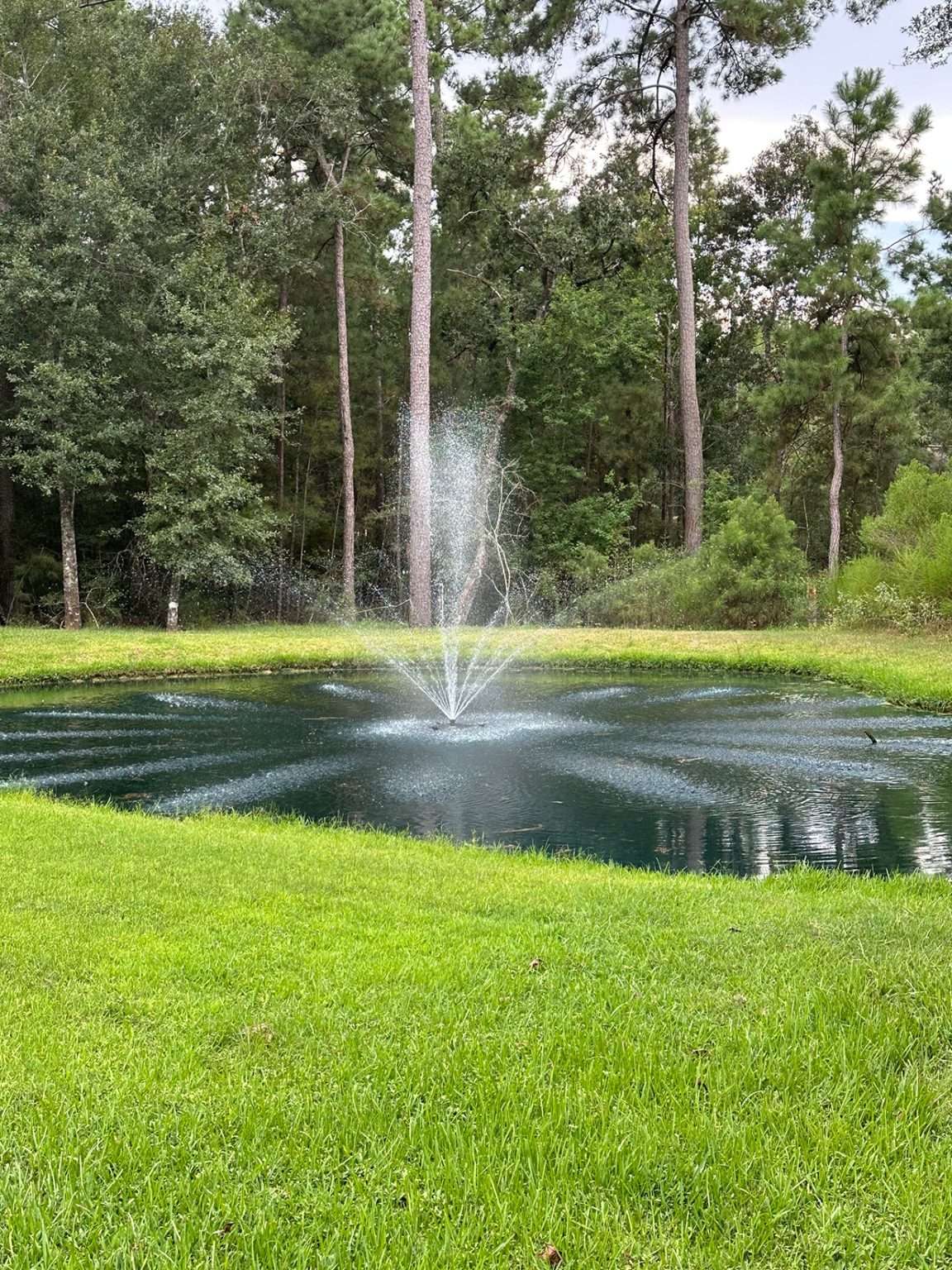
── Pond & Lake Aeration
How Aeration Protects Your Fish — The Oxygen Story
Dissolved oxygen is the most important water-quality factor a pond owner has to understand, and the reason aeration matters. Warmwater fish start to stress when dissolved oxygen falls below about 3 parts per million, and concentrations below roughly 2 ppm will kill some species outright. Oxygen depletions are the most common cause of fish kills in Texas ponds — you can learn more about how dissolved oxygen behaves in a pond from Texas A&M AgriLife.
Summer is the danger window for a simple reason: warm water holds less dissolved oxygen than cool water, while the pond's oxygen demand is higher in the heat. Every plant, fish, and microbe is breathing harder while the water carries less to go around — add a still, cloudy, windless stretch and the math turns against your fish fast.
There's also the layering problem. As a pond warms, it stratifies — a warm, oxygen-holding layer on top and a cooler, oxygen-starved layer below, especially in ponds deeper than six feet. When a cold rain and wind hit during a thunderstorm, that surface layer cools quickly and the pond "turns over," mixing the oxygen-poor bottom water through the whole pond and dropping dissolved oxygen low enough to kill fish across the board. Aeration that circulates the full water column keeps those layers from setting up — the whole point of a diffused system.
Sizing, Placement & Electrical Considerations
A correctly sized aeration system is the difference between protection and wasted money. We size to the waterbody — surface acres, maximum depth, shape, and stocking density all factor in. As a general published guideline for recreational ponds, roughly one-half to one horsepower per surface acre is adequate, but real ponds aren't textbook circles, so we confirm the right system on-site rather than guessing from a satellite photo.
Placement matters as much as size. A diffuser dropped in the wrong spot, or a fountain that can't reach the dead corners, leaves part of the pond unprotected. We position equipment to circulate the whole water column and the whole footprint, accounting for depth contours and prevailing wind.
Then there's power. Surface aerators, fountains, and diffused compressors all need electricity, and getting reliable power to a pond — sometimes a long run from the nearest service — is a real part of the job. We plan the electrical path, recommend the right disconnect and protection, and make sure what we install runs safely through a Texas summer of long nightly run times. Where a pond has no practical power source, we'll lay out the realistic options first.
Our Aeration Process
Every plan is tailored to your pond and your goals, and it starts with a straightforward process. The Phone Call comes first — we talk through your pond, your goals, and whether we're the right fit. The Site Visit is Cameron on your property, assessing depth, vegetation, and conditions in person. The Written Plan is a clear recommendation — system, sizing, placement, electrical approach — not a vague verbal quote. Then comes The Work, Documented: a clean install, tested and explained, with follow-up so you know it's doing its job.
Why Aeration Matters for Texas Ponds
Texas asks more of a pond than most states do. Our summers run hot and long, keeping water temperatures — and oxygen demand — high for months. Drought is the other half: when water levels drop, the same number of fish are crowded into less water, concentrating the oxygen demand and making a crash more likely. And our storm fronts roll in fast, dropping a cold rain on a warm pond and triggering exactly the kind of turnover that kills fish.
Aeration takes the worst of those risks off the table. It keeps oxygen circulating through the deep water where it disappears first, prevents the stratification that turnover depends on, and gives the fish you've stocked a fighting chance through the hardest months. If you're seeing recurring fish kills, sluggish growth, or chronic algae, an electrofishing survey and water-quality assessment is often the smartest first step — it tells us whether aeration alone fixes it.
Who Aeration Helps
Ranch and acreage owners come to us to protect a stock tank or trophy-bass pond from summer kills and keep a fishery thriving through drought — we see plenty of these on ponds around Conroe and Montgomery County and on acreage properties near Tomball. HOAs and community associations usually want two things at once: a pond that looks good and one that doesn't generate algae complaints — a decorative fountain often delivers both. Golf courses, commercial properties, and municipalities lean on aeration to keep irrigation ponds, water features, and campus or city lakes clean, healthy, and presentable.
Related Services
Aeration rarely works alone. We coordinate it with our aquatic weed and algae control so vegetation treatment never crashes your oxygen, and we use an electrofishing survey and water-quality assessment to diagnose what your pond actually needs. If you're starting from scratch, we recommend designing aeration into a new pond build from the start — far cheaper than retrofitting later. You can read more about the principles behind pond aeration from the Southern Regional Aquaculture Center, or browse Texas A&M AgriLife's pond management resources.
── Pond Aeration
Frequently Asked Questions
Does my pond need aeration?
If your pond is deeper than about six feet, has a history of fish kills, runs heavy with algae, or matters to you as a fishery, aeration is worth strong consideration. Deeper ponds stratify and are prone to summer turnovers, and aeration is the most reliable defense. The honest answer for your specific pond comes from a site visit — we'll tell you whether you need it and what kind.
What's the difference between bottom (diffused) aeration and a surface aerator?
Diffused aeration releases air from a diffuser on the pond floor, circulating and oxygenating the entire water column from the bottom up — the right choice for deeper ponds and for breaking up stratification. A surface aerator works from the top, churning or spraying water to drive oxygen in at the surface, which suits shallower ponds and emergency oxygenation. Many ponds do best with diffused aeration; some do fine with surface units.
Will a decorative fountain aerate my pond?
Yes, a fountain provides real surface aeration while looking good doing it — which is why HOAs and commercial properties love them. The catch is that a fountain mainly aerates the upper layer. On a deep pond with a stratification problem, we may recommend pairing it with a diffused system that reaches the bottom, so you get both the look and full-depth protection.
Why do fish kills happen in summer?
Warm water holds less dissolved oxygen than cool water, and a warm pond's oxygen demand is higher at the same time — so summer squeezes oxygen from both ends. Add a cloudy, windless stretch or a storm-front turnover that mixes oxygen-poor bottom water through the pond, and dissolved oxygen can drop low enough to kill fish. Aeration keeps oxygen circulating and is the best prevention.
Can treating weeds or algae cause a fish kill?
It can if it's done carelessly. When a heavy mass of vegetation dies and decomposes, bacteria consume large amounts of oxygen to break it down, which can crash the pond. That's why we coordinate aeration with vegetation treatment and treat heavy infestations in stages rather than all at once — to protect your fish while we clean up the water.
How big an aeration system do I need?
It depends on your pond's surface acres, depth, shape, and fish load. A common published guideline for recreational ponds is roughly one-half to one horsepower per surface acre, but we size every system on-site because real ponds vary so much. You'll get a written recommendation with the specific system and placement for your water.
What brands of aeration equipment do you install?
Cameron is an equipment dealer for Airmax and Keeton Industries, two top-of-the-line brands, and we install and service all major aeration brands. The system we recommend is chosen for your pond's needs, not to push a single product line.
Get a Free Aeration Consultation
If your pond is fighting the heat, or you just want water you're proud of year-round, let's talk. Call Cameron directly at 713-232-9432, email cameron@texaspremierlakes.com, or reach out through our contact page. We'll walk your water, recommend the right system, and put it in writing — an honest plan for a healthier pond.